
Medically reviewed by Dt. Erdem Çetin, DDS · Last updated: September 2026
💷 Quick summary - veneers at Myra Dental Centre, Antalya
E.MAX porcelain veneer: from £265 (UK: £700–£1,000)
CELTRA DUO veneer: from £300 (UK: £800–£1,200)
Full smile (20 veneers): from £5,300 (UK: £14,000–£20,000+)
Consultation + 3D scan: Free
All prices include the laboratory work, fitting, and aftercare guidance. Correct September 2026.
Veneers in the UK cost roughly three to four times more than the same veneers in Turkey. The difference comes down to economics, not quality: higher living costs, labour costs, and clinic overheads in the UK push prices up, while Turkey's lower cost of living and established dental tourism sector keep them down. For many patients comparing veneers in Turkey vs the UK, that gap is the difference between treating a few teeth and designing a complete smile.
But price is only part of the decision. This guide walks you through what veneers actually cost in each country, why the difference exists, how quality and dentist credentials compare, and the honest pros and cons of each option - so you can choose the path that's right for your smile.
🦷 Key takeaway: A full set of 20 porcelain veneers can cost over £14,000 in the UK. The same treatment at Myra Dental Centre in Antalya starts from £5,300, including your free consultation and 3D scan.
How Much Do Veneers Cost in Turkey vs the UK?
The cost of veneers depends on the material and how many teeth you treat. The table below compares typical UK private prices with Myra Dental Centre's published prices in Antalya.
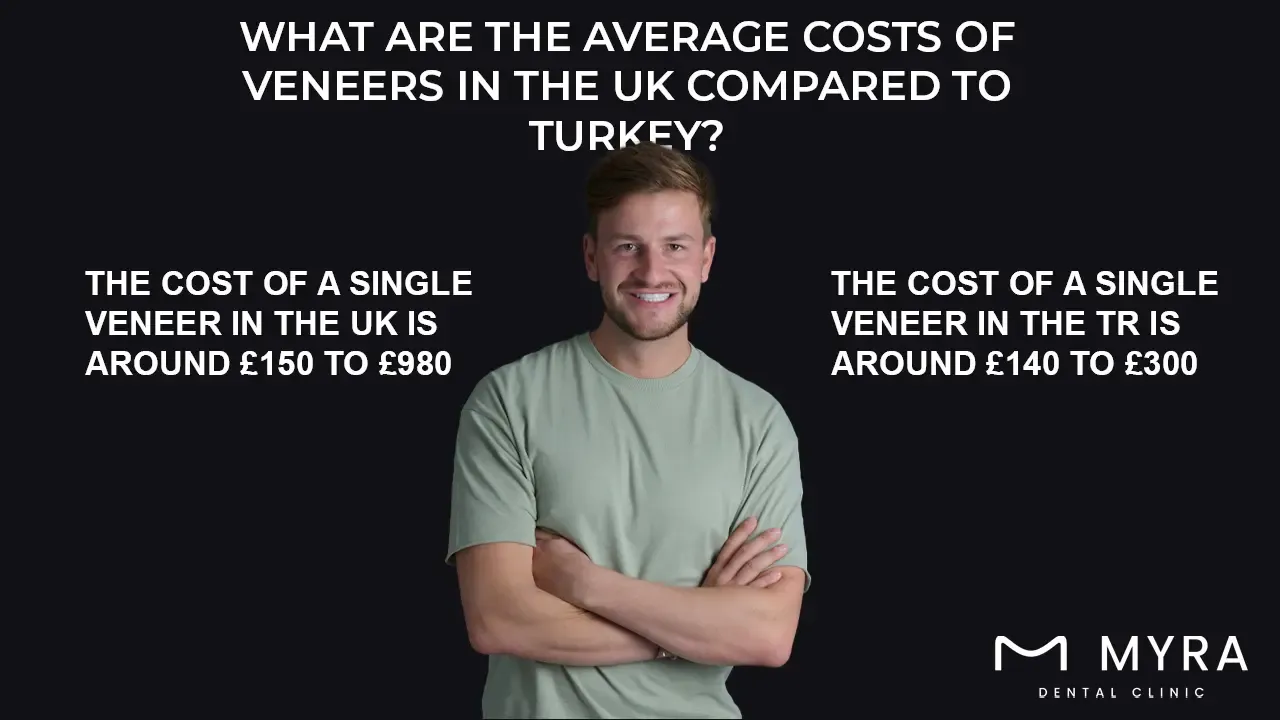
| Veneer type | Turkey (per tooth, Myra) | UK (per tooth, average) | Typical saving |
|---|---|---|---|
| Composite veneer | £140–£300 | £150–£400 | up to ~50% |
| E.MAX porcelain veneer | from £265 | £700–£1,000 | 62–73% |
| CELTRA DUO veneer | from £300 | £800–£1,200 | ~65% |
| Lumineers (no-prep) | £200–£400 | £700–£1,300 | ~60–70% |
| Full set (20 teeth, porcelain) | from £5,300 | £14,000–£20,000+ | 60–70% |
Prices correct September 2026. UK ranges reflect typical private cosmetic fees; veneers are not available on the NHS for purely cosmetic reasons. Always confirm current prices in a personal consultation.
For a single composite veneer, the saving is modest - composite is the most affordable option in both countries. The real difference shows on porcelain and full-smile cases, where UK prices climb steeply and a complete smile transformation in Turkey can cost less than a handful of UK veneers.
Are there hidden costs when travelling for veneers?
A fair comparison includes flights and accommodation. At Myra, airport-clinic-hotel transfers and an English-speaking translator are part of the package, and the consultation, 3D scan, and quotation are free. Even with travel added, most full-smile patients save thousands compared with UK private fees. You can review all our dental treatment prices in Turkey before you book.
Why Are Veneers Cheaper in Turkey?
Lower prices in Turkey reflect local economics, not lower standards. The same factors that make a holiday more affordable also make dental care more affordable:
- Lower cost of living: Salaries, rent, and day-to-day running costs are lower than in the UK.
- Favourable exchange rates: A strong pound stretches further against the Turkish lira.
- Established dental tourism: High patient volume lets clinics invest in advanced technology while keeping prices competitive.
- In-house laboratories: On-site labs remove the third-party costs that UK clinics often pass on.
Crucially, leading Turkish clinics use the same premium materials and equipment as their UK counterparts. At Myra, that means E.MAX (Ivoclar Vivadent) and CELTRA DUO (Dentsply Sirona) ceramics, designed and fitted with Sirona 3D imaging. You are paying less for the location, not for a lesser result.
What Veneer Materials Are Available in Each Country?
Both the UK and Turkey offer the full range of veneer materials. The choice depends on your goals, your budget, and how much natural tooth you want to preserve.
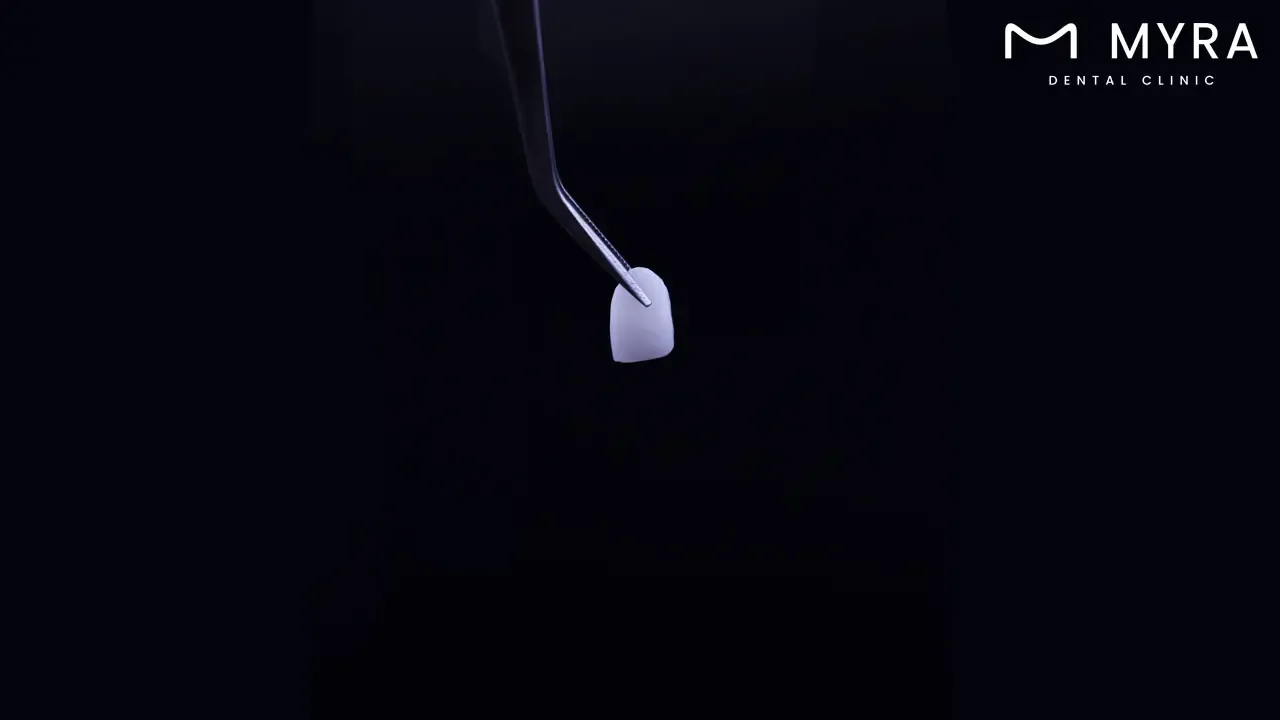
- Composite veneers - Tooth-coloured resin shaped directly onto the tooth in a single visit. Affordable and quick, but less durable (5–7 years) and more prone to staining.
- E.MAX porcelain veneers - Ultra-thin lithium disilicate shells prized for their natural translucency and strength. With good care, porcelain veneers last 10–15 years or longer.
- CELTRA DUO veneers - Zirconia-reinforced lithium silicate for patients who want maximum strength alongside lifelike aesthetics.
- Lumineers - A no-prep or minimal-prep porcelain option that preserves more of your natural tooth, ideal for milder cases.
For a deeper look at how the materials differ, see our guide to veneer types and costs and the comparison of BL2 vs BL3 veneer shades.
Which veneer material lasts longest?
Porcelain options such as E.MAX and CELTRA DUO typically last 10–15 years with good oral hygiene, while composite veneers last around 5–7 years. Your dentist will recommend the right material after assessing your teeth, bite, and goals.
How Do Quality and Dentist Credentials Compare?
Quality concerns are the main reason patients hesitate about treatment abroad - and they deserve a straight answer.
In the UK, dentists are registered with the General Dental Council (GDC), which sets training and conduct standards and gives patients a clear route for complaints. In Turkey, dentists are regulated by the Turkish Ministry of Health, and reputable clinics employ specialists who are members of recognised dental associations and trained on the same international systems.
The honest picture is that quality varies more between individual clinics than between countries. A meticulous, specialist-led clinic in Antalya can deliver results that match or exceed a rushed appointment in London. The decisive factors are the same wherever you go:
- The dentist's specialist training and case experience
- The materials and laboratory used
- The diagnostic technology behind the smile design
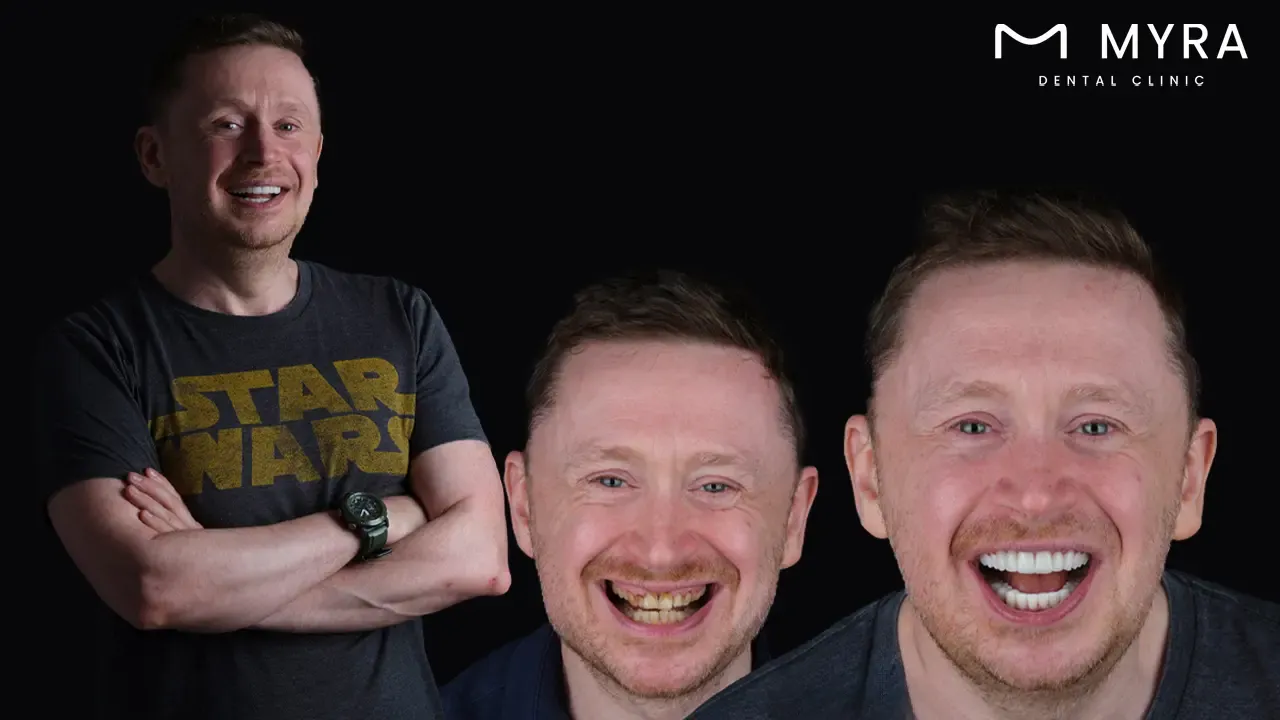
- Transparent before-and-after evidence from real patients
At Myra, each case is handled by the relevant specialist, planned with 3D digital smile design, and crafted in an in-house lab - so you can preview your new smile before a single tooth is prepared.
How Long Does Treatment Take, and What About Travel?
In the UK, veneers usually involve two or three appointments spread over several weeks while the laboratory produces your veneers.
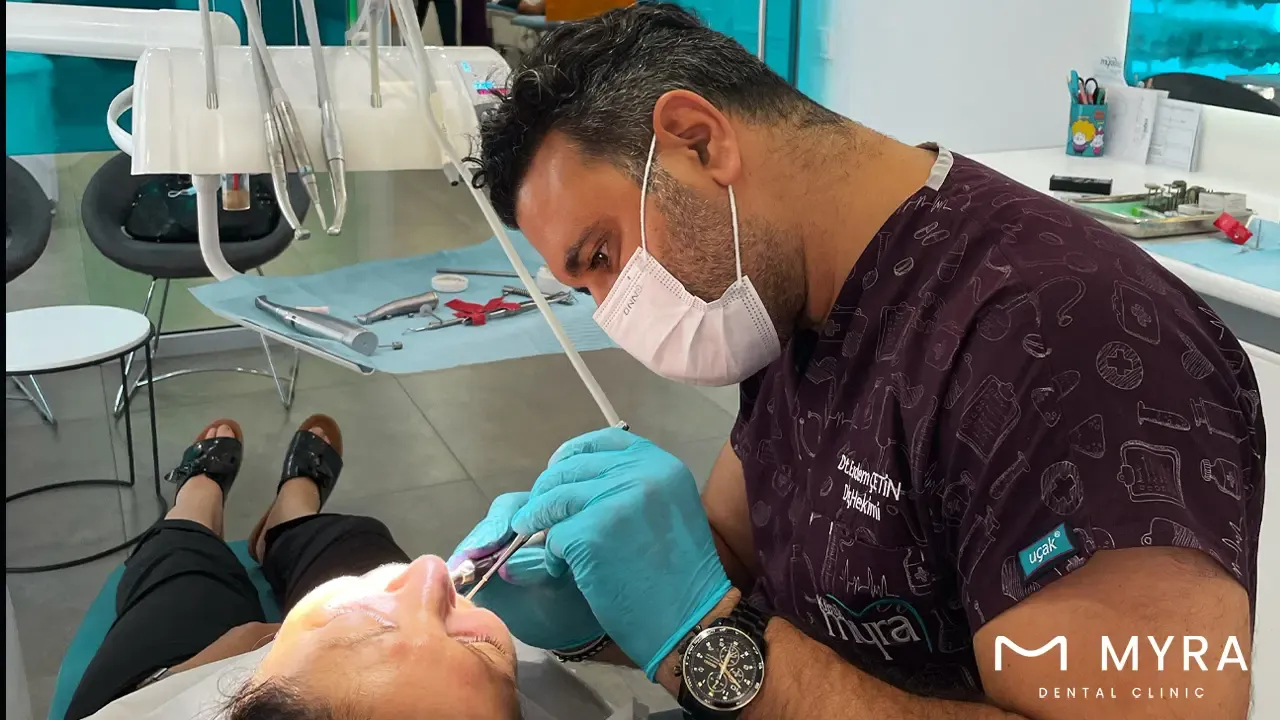
In Turkey, treatment is condensed into a single trip. A typical porcelain veneer case takes 5–7 days, with the design and fitting completed during one stay - often combined with a Mediterranean holiday in Antalya. UK citizens do not need a visa for short visits to Turkey for tourism or treatment, though you should always check current entry requirements before you travel.
How many days should I plan for veneers in Turkey?
Plan for 5–7 days for a full porcelain veneer case. This allows time for your consultation, smile design, tooth preparation, laboratory work, and final fitting - with room to relax and recover between appointments.
What About Aftercare, Warranty, and Follow-Up?
Aftercare is the most common worry for patients treated abroad, so it's worth understanding how each option works.
UK clinics offer the convenience of local follow-up appointments, which matters if an adjustment is needed.
Turkish clinics address this with structured aftercare and material warranties. Reputable providers stand behind the products they fit, provide clear care instructions, and stay reachable for remote support after you return home. Many also coordinate with a local dentist for minor adjustments. As with any cosmetic treatment, outcomes depend on your individual case, and a personal consultation is the only way to confirm what's right for you.
What happens if a veneer needs attention after I get home?
Myra provides detailed aftercare guidance, remote support, and a warranty on the materials used. For minor adjustments, we can advise on local follow-up. Keep your treatment records and warranty details for any future appointment.
Pros and Cons: Veneers in Turkey vs the UK
There is no single right answer - only the right answer for you. Here is a balanced view.
Advantages of choosing the UK:
✓ Local follow-up and easy in-person adjustments
✓ GDC regulation with a familiar complaints process
✓ No travel required
✓ Treatment in your first language throughout
Trade-offs in the UK:
✗ Significantly higher cost, especially for full-smile cases
✗ Longer waits for cosmetic appointments
✗ A consultation fee of £50–£150 is common
Advantages of choosing Turkey:
✓ 60–70% savings on porcelain and full-smile treatment
✓ Premium materials (E.MAX, CELTRA DUO) and 3D smile design
✓ Treatment completed in a single trip
✓ Free consultation, 3D scan, and all-inclusive support package
Trade-offs in Turkey:
✗ Travel and time away from home
✗ Follow-up adjustments need planning or a local dentist
✗ Quality depends heavily on choosing a reputable, specialist-led clinic
Are Veneers in Turkey Safe? Patient Experience and Language
You may have seen the phrase "Turkey teeth" used negatively online. In reality, poor results almost always trace back to over-aggressive preparation at low-cost, high-volume clinics - not to Turkey itself. Choosing an established, specialist-led clinic that preserves healthy tooth structure changes the outcome entirely.
Language is rarely a barrier at clinics set up for international patients. Myra provides a 24/7 English-speaking translator, so you can ask questions and understand every step with confidence. Patient satisfaction at reputable Turkish clinics is high precisely because the experience is built around international visitors - from your first message to your final fitting and beyond.
If safety is your priority, read our detailed guide on whether dental treatment in Turkey is safe before you decide.
Frequently Asked Questions
Are veneers really cheaper in Turkey than the UK?
Yes. Porcelain veneers in the UK typically cost £700–£1,000 per tooth, while E.MAX veneers at Myra start from £265. The saving comes from Turkey's lower living and labour costs, not from cheaper materials or shortcuts.
How much is a full set of veneers in Turkey?
A full set of 20 porcelain veneers starts from around £5,300 at Myra Dental Centre, compared with £14,000–£20,000 or more in the UK. Your exact price depends on the material you choose and the number of teeth treated.
Are veneers in Turkey safe?
They can be very safe when you choose an established, specialist-led clinic that uses premium materials and conservative preparation. Most poor outcomes come from low-cost, high-volume clinics that remove too much tooth. Always review credentials, materials, and real before-and-after results.
How long do veneers from Turkey last?
Porcelain veneers such as E.MAX and CELTRA DUO last 10–15 years or longer with good oral hygiene. Composite veneers last around 5–7 years. Lifespan depends on care, diet, and habits like grinding.
How many days do I need in Turkey for veneers?
Plan for 5–7 days for a full porcelain veneer case. This covers your consultation, smile design, preparation, laboratory work, and final fitting, with time to relax in Antalya between visits.
What if something goes wrong after I return home?
Reputable clinics provide material warranties, clear aftercare instructions, and remote support. Myra offers ongoing guidance and can advise on local follow-up for minor adjustments. Keep your treatment and warranty records for any future appointment.
Ready to Compare Your Options?
Your smile deserves a decision made with clear information, not guesswork. If you'd like to see what veneers would cost for your specific case - and preview your new smile with 3D digital design - our team is here to help, with no pressure and no obligation.
💬 WhatsApp: +90 539 827 40 65
📧 Email: info@myradental.co.uk
📝 Free consultation: Book online
Send us a photo of your smile and we'll reply with honest, specific guidance - usually within one working day.
Medical disclaimer: This article is for general information and does not replace personal dental advice. Veneer suitability, results, and longevity vary by individual. Book a consultation for advice tailored to your teeth.

Dt. Erdem Çetin
Born in Stuttgart, Germany in 1979, Dr. Dt. Erdem Çetin began his education in Kırşehir and completed his schooling there, from primary school through to high school. He then successfully completed his university education at the Faculty of Dentistry at 19 Mayıs University in Samsun.
Share your phone number with us, we'll call you!