
A single tooth dental implant is a surgical procedure in which a titanium post is placed into the jawbone to replace the root of a missing tooth. A custom dental crown is then attached on top, creating a replacement tooth that looks and functions like a natural one.
Single-tooth implants have grown in popularity due to their superior aesthetics, long-term durability, and ability to preserve jawbone density - advantages that traditional tooth replacement options like bridges or dentures cannot fully replicate.
The average cost of a single tooth implant in the US ranges from $3,000 to $6,000, and around £2,000–£2,500 in the UK. For patients exploring more affordable options, a single tooth implant in Turkey typically costs £400–£850 - roughly 50–70% less - even after accounting for travel expenses. Turkish dental clinics offer state-of-the-art technology and internationally trained dentists, providing care quality comparable to UK and US standards. Many patients combine their dental trip with a holiday, making it a practical and rewarding experience.
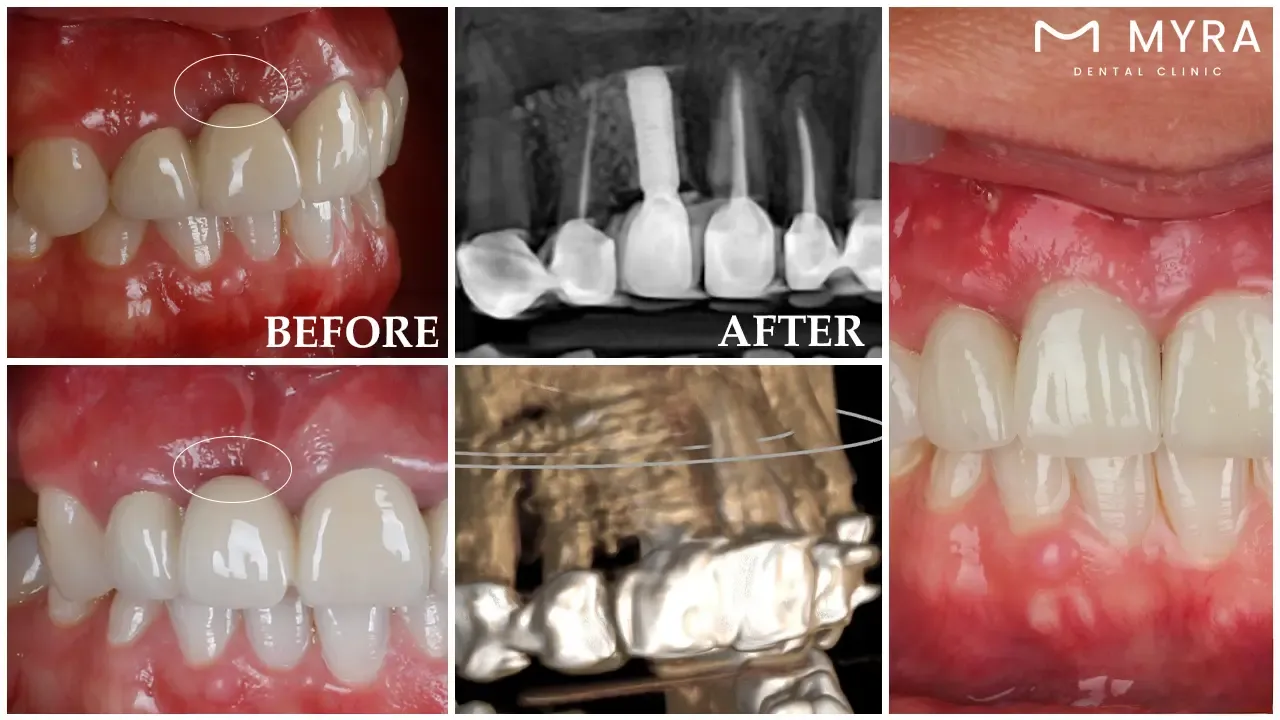
What is a Single Tooth Dental Implant?
A single tooth dental implant restores both the function and appearance of a missing tooth. A small titanium post is surgically inserted into the jawbone, acting as an artificial tooth root. Over time, the implant fuses with the bone through a process called osseointegration, creating a stable foundation for a custom dental crown.
One of the most common types of dental implants is the endosteal implant - a screw or cylinder-shaped post placed directly into the jawbone. Once osseointegration is complete, an abutment connects the implant to the crown.
This treatment is highly recommended for patients who want a replacement tooth that closely mimics their natural teeth in appearance, feel, and function over the long term.
Who is an ideal candidate for a Single Tooth Dental Implant?
An ideal candidate for a single tooth implant is someone who:
- Is missing one tooth due to trauma, infection, or decay
- Has sufficient jawbone density to support the implant
- Has healthy gums free of periodontal disease
- Maintains good oral hygiene and attends regular dental checkups
- Is in good general health with no conditions that impair healing (e.g., uncontrolled diabetes)
- Is a non-smoker, or willing to quit during the healing period
Patients with significant bone loss may require a bone graft before implant placement. Those with active gum disease must complete periodontal treatment first. A dentist evaluates each patient individually to determine suitability.
What are the benefits of having a Single Tooth Dental Implant?
Patients who are looking for a tooth replacement option that is long-lasting and trustworthy find that getting a dental implant for a single tooth is useful for them in a number of different ways. There are a lot of advantages that come along with replacing only one tooth with a dental implant, some of which are listed below.
- Natural appearance: Dental implants offer a lifelike appearance that is practically indistinguishable from the patient's natural teeth in terms of look and sensation. The natural appearance is made possible by their ability to replicate the patient's jawbone and gum tissue. The individual's sense of self-assurance and the appearance of their grin both become noticeably more positive as a direct consequence of it.
- Functionality: Dental implants restore normal tooth function, making it possible for a person to eat, speak, and chew food without experiencing any discomfort or difficulties. They are able to resume leading a regular life, after one has completed treatment.
- Bone preservation: Dental implants aid in the protection of the jawbone by promoting the creation of new bone and stopping the normal bone loss that happens when teeth are removed. The process is known as "bone preservation." "Bone preservation" is the term used to describe the procedure. The position of the jawbone has not moved as a direct consequence of it.
- Durability: Dental implants have the potential to last for a very long time, and in some cases even a lifetime, provided that they are properly cared for and maintained. It, however, is only the case if they are given the utmost attention. But the effect is only seen when the implants are positioned correctly. They are a longer-lasting option for tooth replacement when compared to the other choices that are available.
- Protection of adjacent teeth: The health and integrity of the natural teeth that surround the implant are not compromised in any way due to the fact that adjacent teeth do not have to be altered or used as support for a single dental implant.
- Easy maintenance: Dental implants are simple to care for since they must be brushed, flossed, and seen by a dentist on a regular basis, just like natural teeth. It makes them very easy to keep. It is fairly simple to accomplish. Maintaining dental implants is not very difficult as a direct consequence of it.
- Promotes oral health: Dental implants help in keeping adequate dental alignment and limiting the movement of adjoining teeth, both of which enhance oral health. Dental implants help in maintaining suitable dental alignment, as a result. Dental implants do such by filling the gap created when a tooth is gone and preventing the surrounding teeth from shifting position.
Those who want to enhance their quality of life and restore their smile must seriously consider getting one to replace a single missing tooth because dental implants have numerous benefits, including those described above.
What are the Components of Single Tooth Dental Implant?
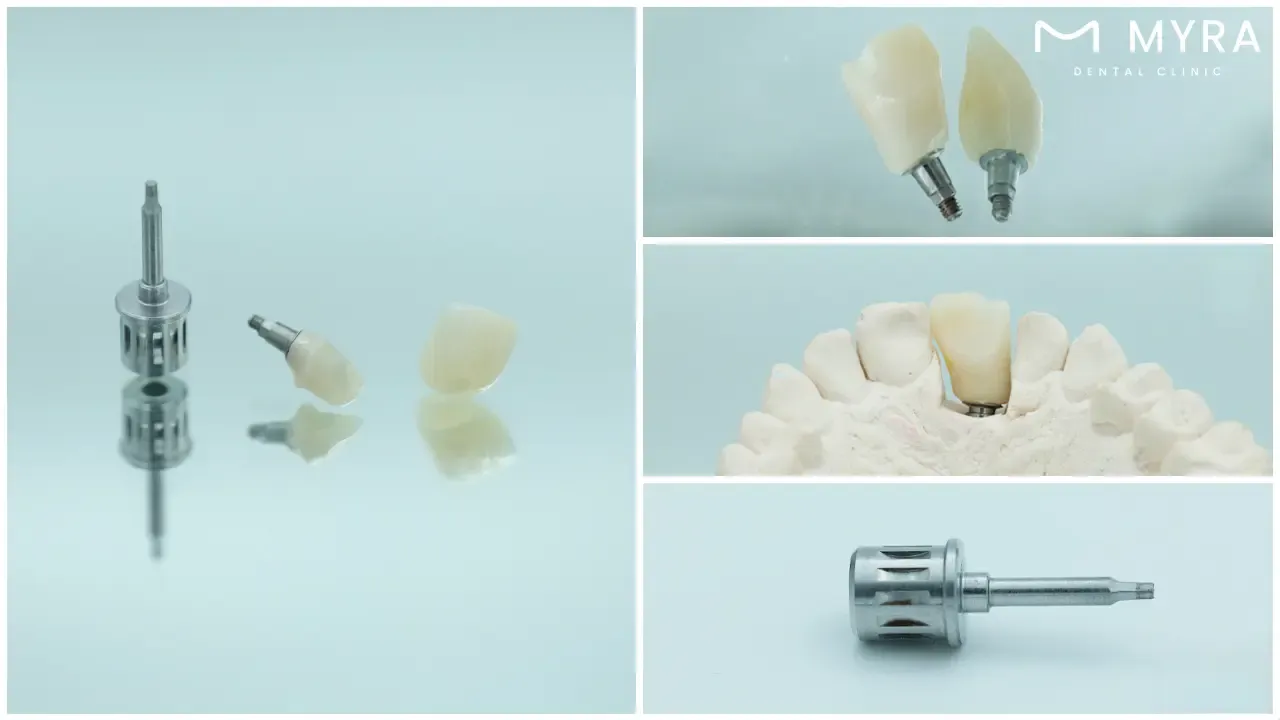
A single tooth implant consists of three main parts:
1. Implant Body A small, screw-shaped post made of titanium or titanium alloy. It is surgically placed into the jawbone and serves as the artificial tooth root. Titanium is preferred for its biocompatibility and proven osseointegration success.
During healing, a cover screw protects the implant's internal threads, followed by a healing abutment that shapes the surrounding gum tissue in preparation for the final restoration.
2. Abutment A small connector that attaches to the top of the implant body and protrudes above the gum line. It serves as the anchor point for the dental crown. Abutments come in various sizes and shapes - some are prefabricated, others are custom-made depending on the implant system, position, and restoration type.
3. Dental Crown A custom-made prosthetic tooth crafted to match the shape, size, and color of the patient's natural teeth. Dental crowns are typically made from porcelain, ceramic, zirconia, or metal alloys, chosen based on aesthetics and functional requirements. The crown is cemented onto the abutment to complete the restoration.
What are the Procedures of Single Tooth Dental Implant?
The steps involved in getting a dental implant for a single tooth are as follows:
Step 1 – Initial Consultation The dentist evaluates the patient's oral health, reviews their medical history, and takes X-rays or CBCT scans to assess bone density and available space. Treatment costs, risks, and expected outcomes are discussed at this stage.
Step 2 – Implant Placement Under local anesthesia (or sedation if preferred), a small incision is made in the gum. The dentist drills a precise channel into the jawbone and places the titanium implant. The site is then sutured and covered with a protective cap.
Step 3 – Osseointegration and Abutment Placement The implant integrates with the jawbone over 3 to 6 months. Once osseointegration is confirmed, the healing cap is removed, and the abutment is attached. Impressions are taken to fabricate a custom crown matching the surrounding teeth.
Step 4 – Crown Installation The finished crown is tried in for fit and bite alignment, adjusted as needed, then permanently cemented to the abutment. The dentist provides post-operative care instructions covering oral hygiene, dietary adjustments, and follow-up appointments.
Are there risks involved in the Single Tooth Dental Implant procedure?
Dental implants have a strong safety profile, with success rates between 90–95%. Complications are uncommon, which further contributes to their popularity. Procedures involving dental implants carry with them the possibility of certain risks of implants and consequences, including the following:
- Infection at the implant site, typically linked to poor post-operative hygiene
- Nerve damage (rare), causing temporary or permanent numbness or tingling
- Sinus complications if upper jaw implants encroach on the sinus cavity
- Implant failure due to insufficient bone density, infection, or excessive load during healing
- Damage to adjacent structures such as neighboring teeth or blood vessels (uncommon with experienced clinicians)
Choosing a qualified implant dentist, following post-operative care instructions, and maintaining good oral hygiene significantly reduces the risk of complications. Any unusual symptoms following surgery should be evaluated promptly.
How long are Single Tooth Dental Implants expected to last?
Single tooth implants are designed as a permanent tooth replacement solution. Clinical studies report a 5-year survival rate of ~95% and a 10-year survival rate of ~90%, with many patients reporting well-functioning implants well beyond 10 years.
Longevity depends on:
- The material used (titanium or titanium alloy implant bodies; zirconia or porcelain crowns are standard)
- Consistent oral hygiene - brushing, flossing, and routine dental exams
- Lifestyle factors such as smoking and systemic conditions like diabetes
With proper care, a single tooth implant can last a lifetime.
Is the Single Tooth Implant procedure painful?
The implant placement itself is performed under local anesthesia, so patients experience minimal discomfort during surgery. Sedation options are also available for anxious patients.
Post-operative discomfort - including mild soreness, swelling, and bruising - is common but typically resolves within a few days. Over-the-counter pain relievers are usually sufficient to manage it.
Pain tolerance and the complexity of placement vary between patients. Those with concerns about pain management should discuss options with their dentist or oral surgeon beforehand.
Can Dental Implant be done if you have Periodontal disease?
Not immediately. Periodontal disease must be treated and controlled before implant placement can proceed, as infected or compromised gum and bone tissue will undermine implant success.
For mild to moderate periodontal disease, treatment typically involves deep cleaning (scaling and root planing), and possibly bone or soft tissue grafting, before implants are considered. For severe cases with significant bone and tissue loss, implant treatment must be postponed until the area has fully healed. Patients with a history of periodontal disease should consult both their dentist and periodontist to determine the safest treatment timeline.
Do Dental Implant Treatments have a high success rate?
Yes. Dental implants are one of the most reliable tooth replacement options available. A systematic review published in the International Journal of Oral and Maxillofacial Implants reported an overall implant survival rate of 95.2% at 5 years and 90.9% at 10 years. A separate study in the Journal of Periodontology found posterior implants had a 5-year success rate of 92.5%.
Success rates are influenced by oral hygiene habits, smoking, systemic health conditions, and the quality of implant placement. Patients who maintain good dental hygiene and attend regular checkups consistently achieve better long-term outcomes.
Single Tooth Dental Implant vs Bridge: What's the Difference?
A dental implant is used to replace a single missing tooth, while a bridge is used to replace many teeth. The aforementioned dental operations are considered to be standard dental procedures. The key differences between the dental bridge vs implant are shown in the following below.
| Feature | Dental Implant | Dental Bridge |
| Placement | Surgically inserted into jawbone | Anchored to adjacent teeth |
| Adjacent teeth | Not affected | Must be filed down to support bridge |
| Bone preservation | Yes - stimulates jawbone | No - bone loss continues |
| Maintenance | Brush and floss like natural teeth | Requires cleaning underneath |
| Longevity | 95% success at 10 years | ~85% success; replacement often needed in 5–15 years |
| Cost | Higher upfront | Lower upfront |
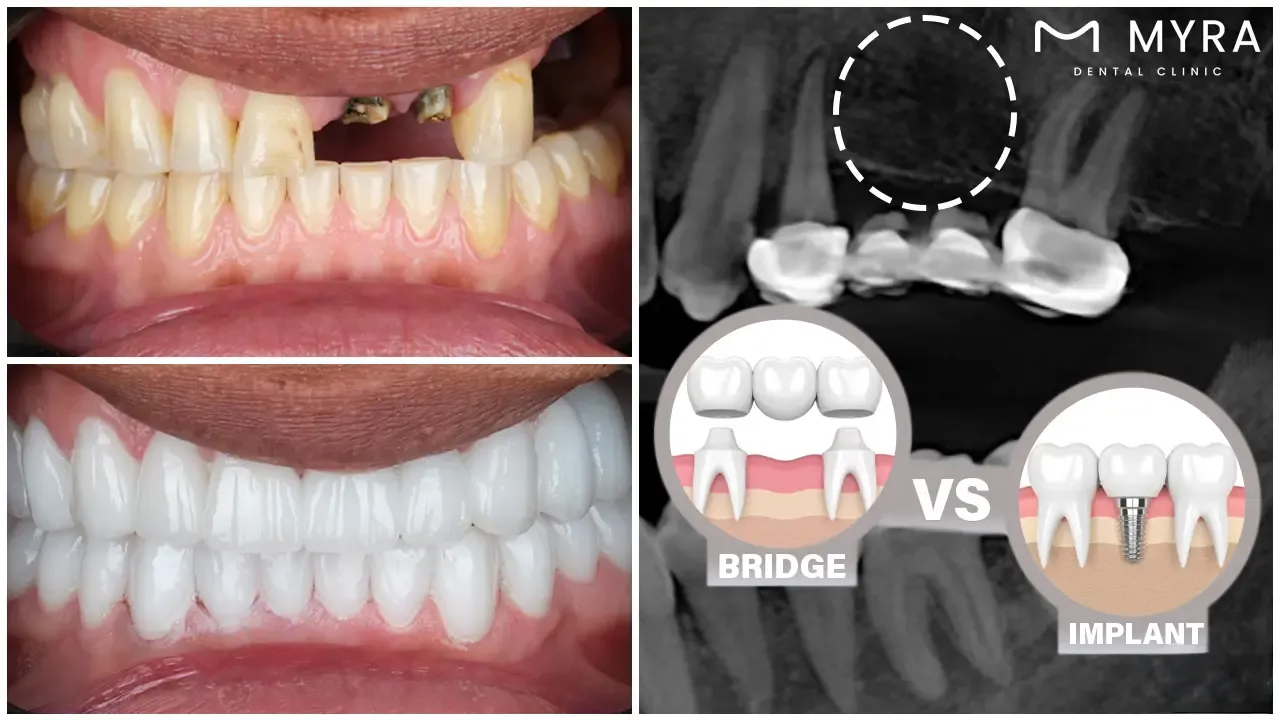
A dental implant is generally the superior long-term solution: it preserves bone, doesn't compromise adjacent teeth, and outlasts bridges with proper care. A dental bridge may be appropriate in cases where implant surgery is not feasible or budget is a primary constraint. Consulting with an experienced implant dentist is the best way to determine the right option for your specific situation.
Frequently Asked Questions About Single Tooth Dental Implants

Dt. Erdem Çetin
Born in Stuttgart, Germany in 1979, Dr. Dt. Erdem Çetin began his education in Kırşehir and completed his schooling there, from primary school through to high school. He then successfully completed his university education at the Faculty of Dentistry at 19 Mayıs University in Samsun.
Share your phone number with us, we'll call you!